
Canucks Autism Network (CAN): Autism Awareness for First Responders

Case Study

Building safer, more inclusive communities by preparing frontline emergency personnel for neurodivergent interactions.

The Canucks Autism Network (CAN) provides specialized programs for individuals on the autism spectrum and their families, while actively promoting provincial inclusion, safety, and acceptance across British Columbia. Recognizing that Autistic individuals are seven times more likely to interact with emergency services than neurotypical peers, CAN works to bridge critical training gaps across public safety networks.
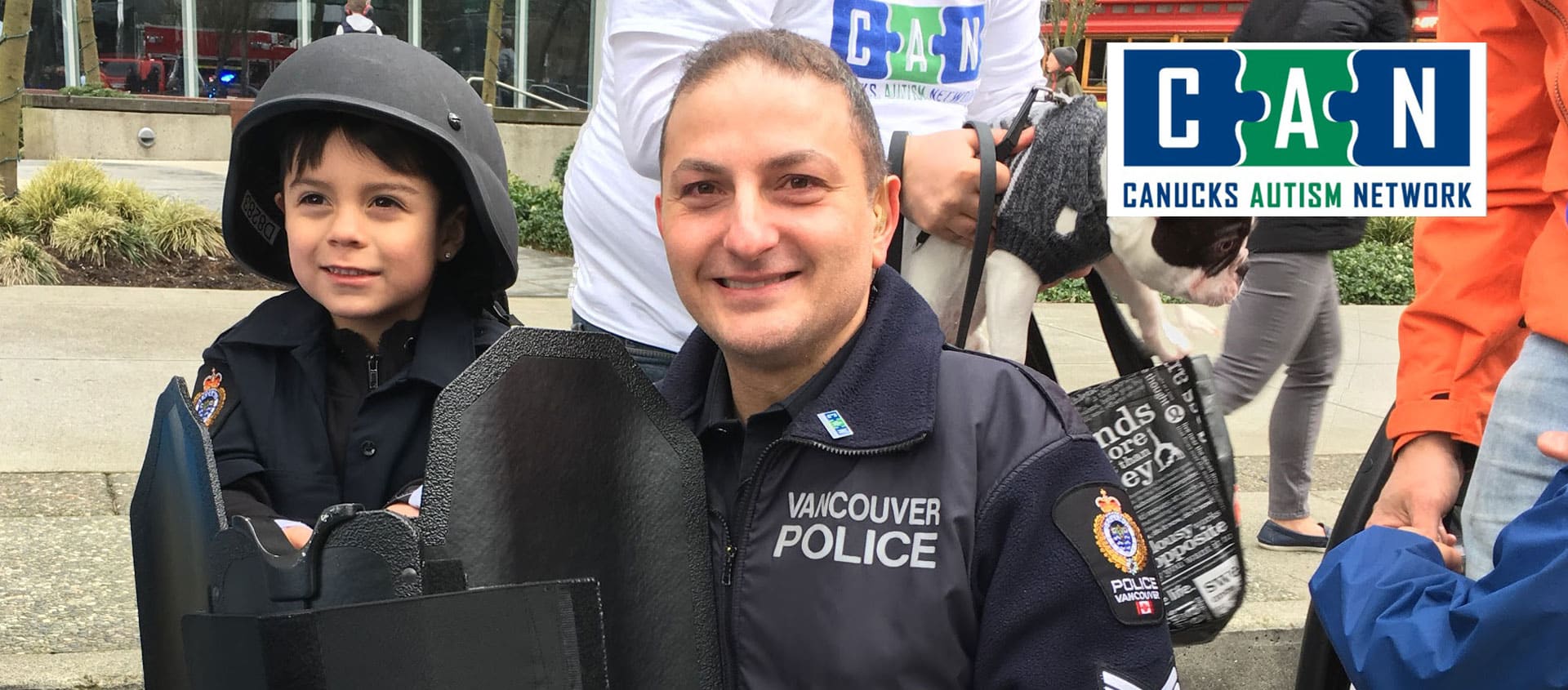
Young boy posing with police officer

Training Goals

Target Learning Audience: First responders, including police officers, fire rescue teams, paramedics, and crisis line workers across British Columbia.
Scope: A targeted, highly practical eLearning framework optimized to deliver immediate, field-ready behavioral support strategies.
Applied Competency: Empowering frontline teams to rapidly recognize behavioral signs of autism, adapt communication methods under pressure, and confidently utilize sensory de-escalation techniques.

Project Snapshot

Client: Canucks Autism Network (CAN)

Scope: Specialized Public Safety Awareness Module

Format: Self-Paced eLearning (Asynchronous)

Tools: Articulate 360, Expert Video Integrations, Decision-Based Interactive Scenarios

The PathWise Process: Our Instructional Design Approach

PathWise Solutions partnered with CAN to replace theoretical abstractions with an interactive, high-impact framework designed specifically for high-stress operational environments.

Step 1: Strategic Analysis & Alignment

Our discovery process rejected traditional generic training templates in favor of a strictly outcome-focused analysis. We worked with CAN sector experts and self-advocates to isolate the precise field challenges first responders encounter during emergency calls.

We focused on mapping specific learning outcomes to real-world behavioral changes, identifying exactly what an emergency worker needs to know—and do differently—to guarantee safety and de-escalation in active community spaces.

Step 2: Creative Design & Development

To make the content instantly credible to public safety personnel, our team skipped dry text slides and anchored the course layout around multimedia-driven peer perspectives. We filmed and integrated professional video interviews featuring real first responders and medical specialists sharing direct operational experiences.

By using real voices from the field to deliver abstract sensory concepts, we successfully created an educational environment that is highly engaging, respectful, and perfectly aligned with first responder team culture.

Step 3: Interactive Implementation

We prioritized risk-free, decision-based practical application over passive reading to ensure maximum field retention.

Active Collaboration: PathWise designed a suite of interactive, branching scenarios based entirely on real-world crises emergency workers routinely face on the job. By immersing learners in these character-driven, simulated situations, personnel are able to safely practice identifying neurodivergent triggers and testing de-escalation tactics in a controlled sandbox before entering the field.

Project Outcomes

Cultivating provincial accessibility and transforming frontline crisis intervention through expert-driven micro-learning.
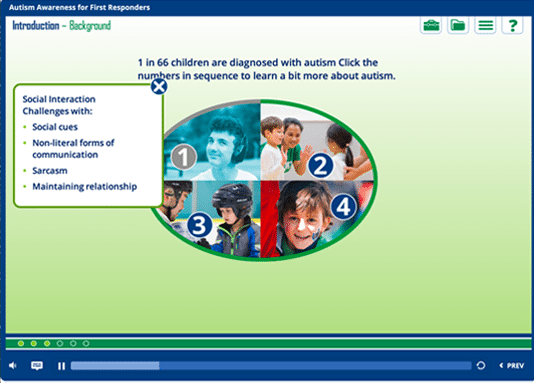
Delivered a practical, learner-centered digital training module widely adopted across provincial public safety agencies.
Replaced traditional rote memorization with highly effective, empathetic storytelling and authentic first-hand peer video resources.
Provided emergency services with actionable support strategies that minimize friction, reduce accidental harms, and directly improve safety metrics for neurodivergent individuals in BC.
CAN Module Example Interface
Course Module Example
CAN Module Example Interface
Course Module Example
CAN Module Example Interface
Course Module Example
Scroll to Top
