National Collaborating Centre for Determinants of Health: Introduction to Health Equity

Case Study

Designing a bilingual, WCAG-compliant eLearning course utilizing narrative storytelling and interactive multimedia to train Canadian public health professionals on foundational health equity principles.

The National Collaborating Centre for the Determinants of Health (NCCDH) provides the Canadian public health community with vital knowledge and resources to take action on the social determinants of health. Their core mission is to close the gap between those who are most and least healthy across the country.

Training Goals

Target Learning Audience: A diverse, pan-Canadian audience of public health professionals, practitioners, and administrative staff.
Scope: A multi-module, self-directed introductory health equity course, fully localized into both English and French.
Strategic Alignment: Rescuing highly valuable, previously developed content following the cancellation of a federal training program, and reimagining it as a joint-branded digital asset in partnership with Public Health Ontario (PHO).

Project Snapshot

Client: NCCDH (in partnership with Public Health Ontario)

Scope: Foundational eLearning Course & Bilingual Translation

Format: Self-Paced eLearning (Asynchronous)

Tools: Articulate 360, WCAG 2.0 Compliance Integration, SME Video Production, Custom Scenario Storytelling

The PathWise Process: Our Instructional Design Approach

PathWise Solutions collaborated closely with NCCDH and PHO to transform complex, academic health data into an engaging, story-driven learning experience.

Step 1: Strategic Analysis & Alignment

Our core challenge was ensuring the content seamlessly integrated into PHO’s existing Online Learning platform while maintaining absolute visual accessibility.

We focused on building a reflective instructional framework. Rather than simply presenting data, we engineered the curriculum to provide constant opportunities for public health workers to actively reflect on how abstract health equity concepts directly apply to their own unique community contexts.

Step 2: Creative Design & Development

To humanize the complex material, our instructional designers built the course around a central narrative. We structured each module to follow the journey of a fictional task force leader (Tanis) as she helps her team understand health equity, allowing learners to increase their own knowledge parallel to the characters.

Active Collaboration: We expanded on this narrative by recording and editing extensive video interviews with international and Canadian Subject Matter Experts (SMEs). By carefully weaving these expert interviews—featuring both English and French speakers—into the fictional storyline, we successfully merged academic rigor with highly engaging storytelling.

Step 3: Interactive Implementation

We focused on digital inclusion, ensuring every interactive element was universally accessible to all learners.

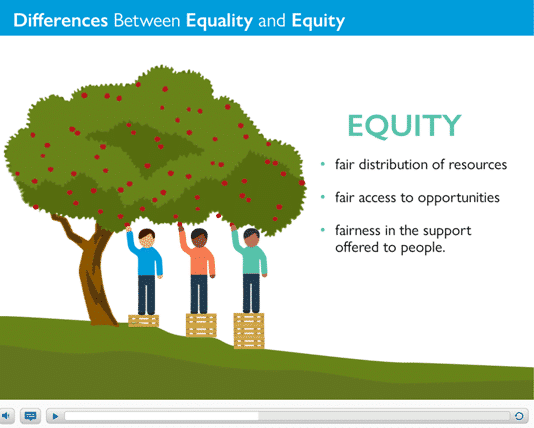
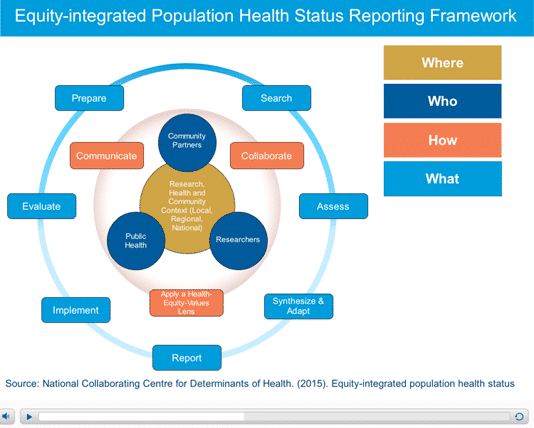
We re-engineered statistical graphs into custom-built interactive maps, drag-and-drop activities, and knowledge checks. To meet WCAG and PHO accessibility standards, we developed alternate screen-reader-compatible versions of specific course activities, engineered clear image descriptions (alt text), and provided downloadable PDF versions of every module. Finally, our team managed the process of adjusting all graphics, UI layouts, and video closed-captioning to execute a full-course French translation.

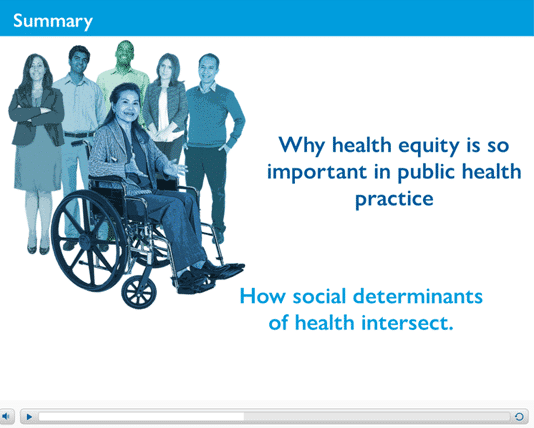
NCCDH & PHO Illustration

Project Outcomes

Transforming legacy software into an accessible, highly resilient digital training ecosystem for public safety professionals.
Future-proofed critical emergency communications training by executing a seamless HTML5 conversion ahead of global Flash deprecation.
Delivered a cost-effective upgrade by intelligently repurposing existing digital assets alongside modern video and interactive elements.
Deployed a customized Moodle environment specifically designed to accommodate the erratic schedules of emergency personnel, ensuring high completion rates across all 50 regional agencies.
Provided CREST with high-quality media assets (video and photography) that were further utilized for organizational promotion and public social media outreach.
Module Interface
Module Interface
Module Interface
Module Interface
Module Interface
Module Interface
Scroll to Top